The Best Fluffy Pancakes recipe you will fall in love with. Full of tips and tricks to help you make the best pancakes.

Finding the perfect diet for your feline friend can be a challenge, which is why so many pet owners are turning to vet approved homemade cat food recipes. There is something incredibly satisfying about preparing a meal for your pet, knowing exactly what ingredients are going into their bowl. Commercial cat foods often contain fillers, preservatives, and ambiguous meat by-products that can leave health-conscious owners worried. By switching to a homemade diet, you take control of your cat’s health, ensuring they receive high-quality protein and essential nutrients without the junk.
However, making this switch isn’t as simple as tossing some cooked chicken into a bowl. Cats have very specific, complex nutritional requirements that differ vastly from dogs or humans. This is where vet approved homemade cat food recipes become vital. A nutritionally unbalanced diet can lead to serious health issues, including blindness, heart disease, and bone deformities. This ultimate guide will walk you through everything you need to know about crafting safe, healthy, and delicious meals for your cat, backed by veterinary principles.
In this extensive guide, we will explore the benefits of home cooking, the critical nutrients your cat needs, safety precautions you must take, and of course, a collection of detailed recipes to get you started.
Why Choose Vet Approved Homemade Cat Food Recipes?
The primary reason to seek out vet approved homemade cat food recipes is safety. As obligate carnivores, cats require a diet high in animal-based protein. Unlike omnivores, they cannot synthesize certain essential amino acids and vitamins on their own. If you simply guess at the ingredients, you risk depriving your cat of Taurine, Arachidonic Acid, Vitamin A, and other critical nutrients.
By following vet approved homemade cat food recipes, you ensure that:
- Protein Levels are Adequate: Cats need much more protein than dogs.
- Taurine is Included: Deficiency in this amino acid can be fatal.
- Calcium-to-Phosphorus Ratio is Balanced: Essential for bone health.
- Hydration is Improved: Homemade wet food has higher moisture content than dry kibble, supporting kidney health.
When you control the ingredients, you can also cater to specific dietary needs, such as allergies to grains or specific proteins like fish or beef.
Understanding Feline Nutrition Essentials
Before diving into the cooking process, it is crucial to understand why vet approved homemade cat food recipes are formulated the way they are. Here are the non-negotiable nutrients your cat needs.
1. High-Quality Animal Protein
Cats use protein as their primary energy source. Adult cats require at least 26% protein on a dry matter basis, while kittens need upwards of 30%. Good sources include chicken, turkey, rabbit, beef, and lamb.
2. Fats and Fatty Acids
Fats provide concentrated energy and essential fatty acids like omega-3 and omega-6. Animal fats are preferred, as cats cannot efficiently convert plant-based oils into the active forms they need (like Arachidonic Acid).
3. Taurine
This is the big one. Taurine is an amino acid found almost exclusively in animal tissues (muscle meat, heart, liver). Cooking can degrade taurine, so vet approved homemade cat food recipes often suggest adding supplemental taurine to be safe.
4. Vitamins and Minerals
Calcium, Vitamin A, Vitamin D, and B vitamins (especially Thiamine) are critical. A common mistake in homemade diets is feeding only meat without bone or a calcium supplement, leading to “all-meat syndrome” (nutritional secondary hyperparathyroidism).
7 Vet Approved Homemade Cat Food Recipes
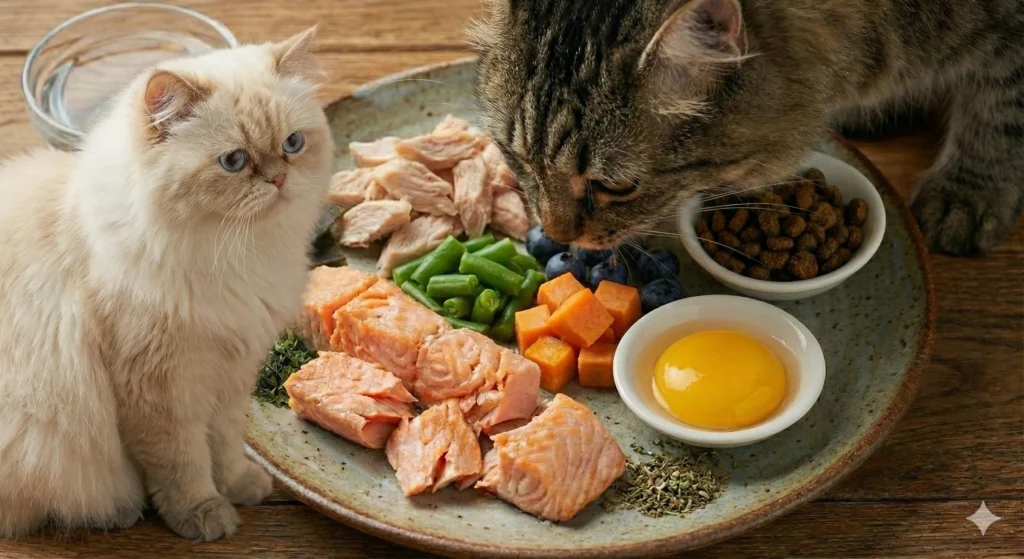
Below are seven distinct recipes designed to offer variety and balanced nutrition. Please remember to consult your own veterinarian before making a permanent switch, as your cat’s age, weight, and health status may require adjustments.
1. The Chicken and Pumpkin Delight
This is a staple among vet approved homemade cat food recipes because it is gentle on the stomach and widely accepted by picky eaters.
Ingredients:
- 1 cup cooked chicken breast or thigh (boneless, skinless)
- ¼ cup cooked pumpkin (plain, not pie filling)
- ¼ cup cooked brown rice (optional, for fiber)
- 1 teaspoon fish oil (for omega-3s)
- Balanced supplement blend (such as Balance IT or a vet-prescribed powder)
Instructions:
- Boil or bake the chicken until fully cooked. Do not use onions, garlic, or salt.
- Shred or chop the chicken into bite-sized pieces appropriate for your cat.
- Mix the chicken with the cooked pumpkin and brown rice.
- Allow the mixture to cool to room temperature.
- Stir in the fish oil and the supplement blend just before serving to prevent nutrient degradation from heat.
Why it works: Pumpkin provides excellent fiber which aids digestion, while chicken offers lean protein.
2. Savory Beef and Rice Stew
For cats that prefer red meat, this recipe provides a rich source of iron and protein. Like other vet approved homemade cat food recipes, it emphasizes the correct meat-to-grain ratio.
Ingredients:
- 1 pound lean ground beef (90% lean or higher)
- 1 hard-boiled egg (chopped)
- ½ cup cooked white rice
- 1 tablespoon steamed broccoli (pureed)
- Calcium carbonate supplement (approx. 1000mg, or as directed by your vet)
- Taurine supplement
Instructions:
- Cook the ground beef in a skillet until browned. Drain excess fat.
- Steam the broccoli until soft and puree it.
- In a large bowl, combine the beef, chopped egg, rice, and broccoli puree.
- Once cool, add the calcium and taurine supplements.
- Portion out into daily servings and freeze what you won’t use within 3 days.
Why it works: Beef is nutrient-dense, and the egg adds a “perfect protein” boost with additional amino acids.
3. Turkey and Spinach Feast
Turkey is a hypoallergenic option for many cats and is a common star in vet approved homemade cat food recipes.
Ingredients:
- 1 cup cooked turkey (dark meat is preferable for higher taurine)
- ¼ cup steamed spinach (finely chopped)
- ¼ cup cooked oatmeal
- 1 teaspoon sunflower oil
- Essential vitamin/mineral mix
Instructions:
- Roast or boil the turkey. Remove skin and bones.
- Cook oatmeal according to package instructions (use water, not milk).
- Steam spinach lightly.
- Combine turkey, oatmeal, spinach, and sunflower oil in a food processor. Pulse a few times for a chunky texture or blend until smooth for a pâté.
- Mix in the vitamin/mineral powder once cooled.
Why it works: Spinach provides vitamins A, C, and K, though it should be used in moderation for cats with urinary issues (due to oxalates).
4. Rabbit and Asparagus Gourmet
Rabbit is a natural prey source for cats, making this one of the most biologically appropriate vet approved homemade cat food recipes.
Ingredients:
- ½ pound rabbit meat (boneless)
- 1 teaspoon olive oil
- 2 tablespoons steamed asparagus (cut very small)
- Bone meal powder (for calcium)
- Taurine and Vitamin E supplements
Instructions:
- Bake rabbit meat pieces in a small amount of water to keep them moist.
- Steam asparagus spears until tender.
- Dice the meat and vegetables.
- Toss with olive oil.
- Add bone meal and vitamins after the food has cooled.
Why it works: Rabbit is a novel protein, perfect for cats with sensitivities to chicken or beef.
5. Fish Frenzy (Occasional Treat)
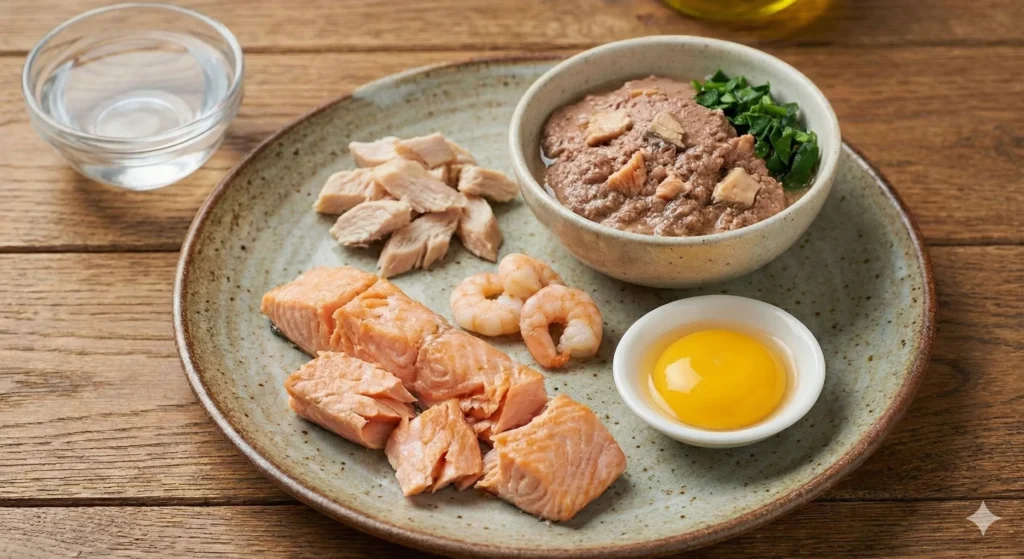
While cats love fish, it should generally be an occasional treat rather than a daily staple due to heavy metals and potential for Thiamine destruction. However, balanced vet approved homemade cat food recipes can include fish sparingly.
Ingredients:
- 1 can of sardines in water (no salt added) or cooked salmon
- 1 tablespoon cooked carrot (mashed)
- 1 tablespoon nutritional yeast (for B vitamins)
- Balanced supplement powder
Instructions:
- Drain the sardines or flake the cooked salmon.
- Mash the fish with the cooked carrot.
- Sprinkle nutritional yeast over the top for flavor and B-vitamin boost.
- Mix in the necessary supplements.
Why it works: Rich in Omega-3 fatty acids, this meal is excellent for skin and coat health.
6. Lamb and Vegetable Medley
Lamb is fatty and calorie-dense, making this recipe ideal for active cats or those needing to gain weight.
Ingredients:
- 1 cup lean ground lamb
- ¼ cup cooked sweet potato (mashed)
- 1 tablespoon cooked green beans (chopped)
- ½ teaspoon bone meal
- Taurine supplement
Instructions:
- Sauté lamb until fully cooked.
- Boil sweet potato and mash it.
- Combine lamb, sweet potato, and green beans.
- Add bone meal and taurine once the mixture is at room temperature.
Why it works: The sweet potato offers digestible carbohydrates and fiber, while lamb provides a distinct flavor profile.
7. Simple Egg and Cottage Cheese Mix
Sometimes you need a bland, easy-to-digest meal for a recovering cat. This is one of the simplest vet approved homemade cat food recipes.
Ingredients:
- 2 hard-boiled eggs
- 2 tablespoons cottage cheese (low fat)
- 1 tablespoon cooked zucchini (grated)
- Fish oil supplement
Instructions:
- Boil eggs, peel, and chop finely.
- Mix with cottage cheese and grated zucchini.
- Add fish oil.
Why it works: Eggs are biologically highly available protein sources, and cottage cheese adds calcium and protein (if your cat tolerates small amounts of dairy).
Safety Tips for Preparing Homemade Cat Food
Creating vet approved homemade cat food recipes requires strict adherence to safety protocols to prevent bacterial contamination and nutritional deficits.
Handling Raw Meat vs. Cooked
While some proponents argue for raw diets (BARF), the [suspicious link removed] and FDA generally recommend cooking meat to eliminate pathogens like Salmonella and Listeria, which can harm both cats and the humans handling the food. If you choose raw, ensure you are sourcing high-quality meats and sanitizing surfaces diligently. All the recipes listed above are designed to be cooked for maximum safety.
Storage and Preservation
Homemade food lacks the powerful preservatives found in kibble.
- Refrigerator: Store for a maximum of 3 days.
- Freezer: You can freeze portions for up to 2-3 months. Thaw in the refrigerator overnight, never on the counter.
The Danger of Toxic Ingredients
Never, under any circumstances, include the following in your vet approved homemade cat food recipes:
- Onions and Garlic: These cause oxidative damage to red blood cells (Heinz body anemia).
- Grapes and Raisins: Can cause kidney failure.
- Chocolate: Contains theobromine, which is toxic.
- Xylitol: An artificial sweetener that is lethal to pets.
- Cooked Bones: These can splinter and cause internal perforation.
Supplements: The Secret to Success
You cannot simply feed meat and expect your cat to thrive. In the wild, cats eat the entire mouse—bones, organs, blood, and glands. Muscle meat alone is deficient in calcium and other minerals.
To make vet approved homemade cat food recipes nutritionally complete, you must use a supplement balancer. Commercial pre-mixes like Balance IT or EZComplete are popular choices designed to be added to boneless meat. Alternatively, you can work with a veterinary nutritionist to create a custom vitamin blend.
Key Supplements often needed:
- Calcium Source: Bone meal or eggshell powder (approx. 800-1000mg calcium per pound of meat).
- Taurine: 250-500mg per day.
- Vitamin E: To protect against oxidative stress.
- Iodine: Often from kelp (use cautiously as thyroid issues are common in cats).
For a deeper dive into supplements, check out our guide on Essential Cat Supplements.
Transitioning Your Cat to a Homemade Diet
Cats are creatures of habit. If you suddenly swap their dry kibble for one of these vet approved homemade cat food recipes, they may turn their nose up or develop digestive upset.
The Slow Transition Method:
- Days 1-3: Mix 25% homemade food with 75% old food.
- Days 4-6: Mix 50% homemade food with 50% old food.
- Days 7-9: Mix 75% homemade food with 25% old food.
- Day 10: 100% homemade food.
Warm the food slightly to body temperature to release the aromas, which stimulates the cat’s appetite.
Monitoring Your Cat’s Health
Once you have started feeding vet approved homemade cat food recipes, monitoring is key. Watch for:
- Weight changes: Weigh your cat weekly.
- Coat condition: Should be shiny and soft.
- Energy levels: Should be active and alert.
- Litter box habits: Stool should be firm and regular.
It is highly recommended to have blood work done by your vet 3-4 months after starting a homemade diet to ensure no hidden deficiencies are developing. For more on keeping your cat healthy, visit our Feline Health Center.
Conclusion
Switching to a homemade diet is a labor of love that can yield tremendous benefits for your cat’s longevity and vitality. By adhering to vet approved homemade cat food recipes, you avoid the pitfalls of nutritional imbalance and ensure your furry companion gets the best possible nutrition. Remember, every cat is an individual. What works for one may not work for another, so keep an open dialogue with your veterinarian as you embark on this culinary journey for your pet.
With the right ingredients, proper supplementation, and a little patience, you will be providing 5-star meals that are as healthy as they are delicious.
Frequently Asked Questions (FAQ)
Can I feed my cat only chicken breast?
No. Feeding only chicken breast is dangerous as it lacks calcium, taurine, and essential vitamins. It must be part of balanced vet approved homemade cat food recipes that include organs and supplements.
How much homemade food should I feed my cat?
An average 10lb cat typically needs about 200-250 calories per day. This usually equates to about 4-6 ounces of homemade food, but it varies based on the recipe’s caloric density and the cat’s activity level.
Is raw food better than cooked?
Raw food enthusiasts claim it preserves enzymes, but it carries bacterial risks. Most veterinarians prefer cooked vet approved homemade cat food recipes to ensure safety while still providing high-quality fresh nutrition.
Where can I find a veterinary nutritionist?
You can find board-certified veterinary nutritionists through the American College of Veterinary Nutrition. They can formulate custom recipes tailored to your cat’s specific health needs.